Web Design 2026: From Aestheticism to Sensory Efficiency and Creative Innovation
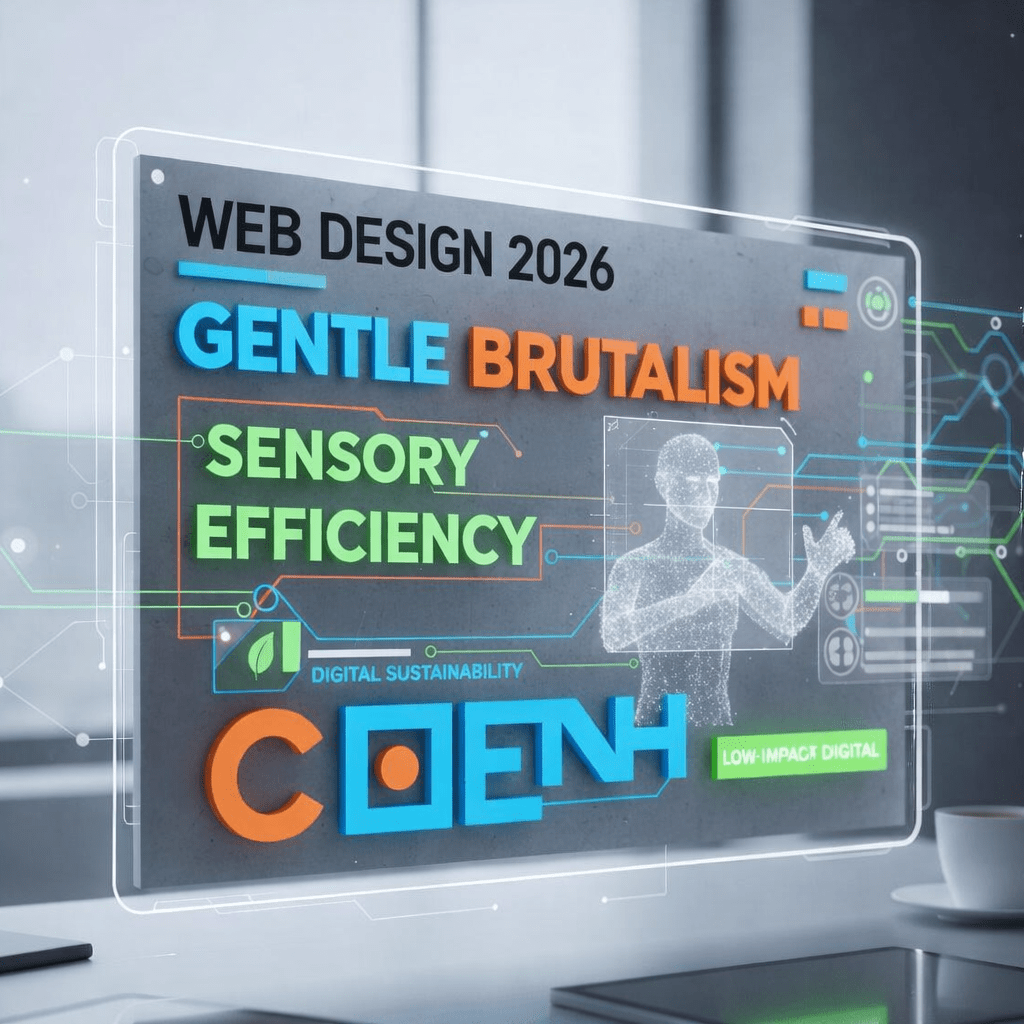

Web Design 2026 has definitively moved beyond the phase of merely ‘looking good’ to fully enter the era of hyper-sensory personalization and intelligent efficiency. With the maturity of Web 3.0 and the deep integration of artificial intelligence, users no longer expect a static, generic interface, but rather an experience that adapts in real time to their behavior, preferences, emotional context, and even their sensory needs. Design is no longer just about visual aesthetics; it now prioritizes sensory efficiency: how the site feels, responds, and anticipates the user, reducing cognitive friction and maximizing engagement within milliseconds.
The Rise of Gentle Brutalism
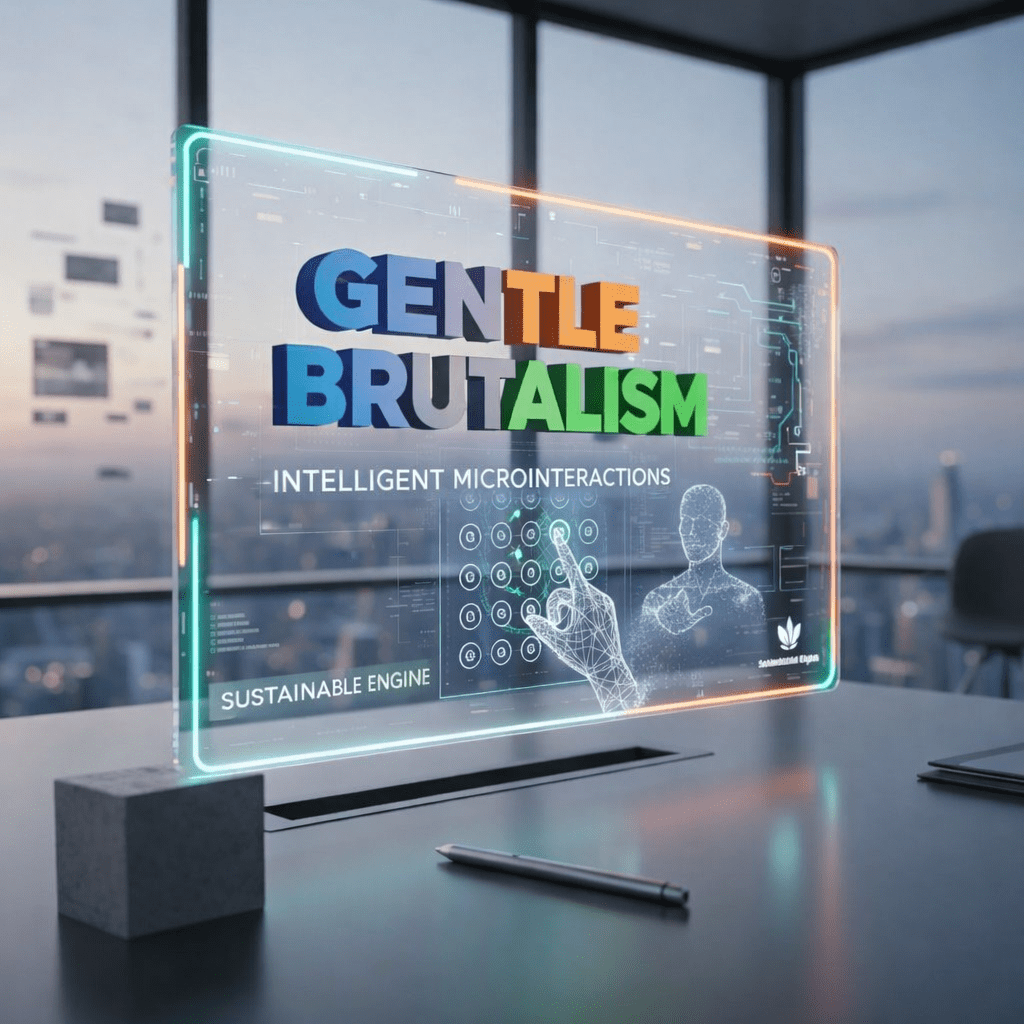
After a decade dominated by sterile minimalism and ultra-clean AI-generated templates, 2026 brings Gentle Brutalism (or refined/neobrutalism) as the prevailing trend. This style recovers elements of classic brutalism—heavy oversized typography, visible grids, intentional asymmetries, vibrant or saturated colors, and raw textures—but combines them with a sophisticated UX layer that avoids confusion and prioritizes intuitive navigation.
Unlike the raw brutalism of 2010–2020, which at times felt hostile, Gentle Brutalism balances strong visual identity with functional clarity. According to updated studies by the Nielsen Norman Group in 2025–2026, visual clarity remains the number one factor in user retention (above 70% in eye-tracking tests), and this trend achieves precisely that: a bold aesthetic that conveys authenticity and rebellion against the ‘AI-perfect,’ without sacrificing usability. Disruptive brands in fashion, technology, and creative agencies adopt it to stand out in a sea of homogeneous designs. Examples include asymmetric layouts with exposed grids, monospace typography combined with organic elements, and micro-interactions that ‘break’ rigidity without disorienting.
This shift responds to cultural fatigue: after years of artificial perfection, users value the human, the imperfect, and the intentional. The result is a design that feels honest and memorable.
Digital Sustainability: 'Green Hosting' is not enough
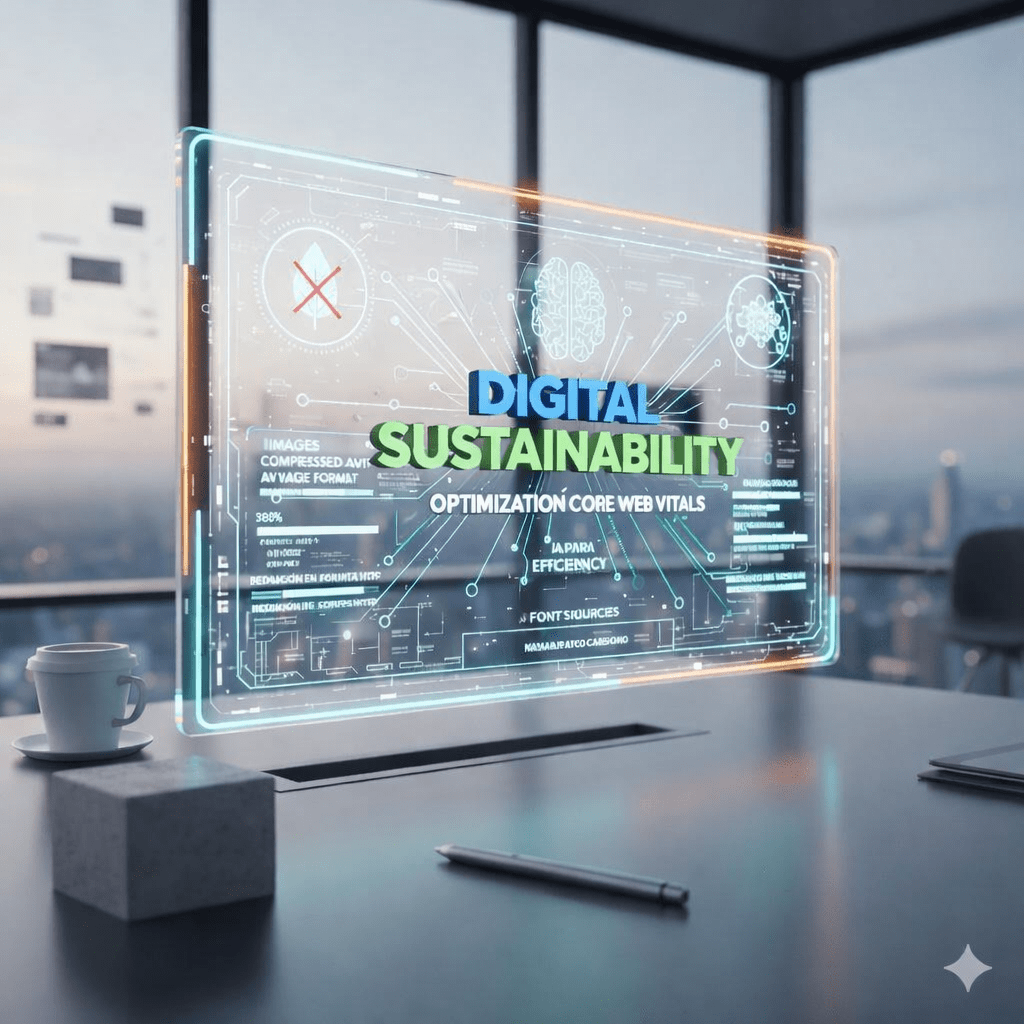
Green hosting (servers powered by renewable energy) is no longer enough in 2026; it has become a basic requirement. Google has integrated carbon footprint metrics directly into the expanded Core Web Vitals, penalizing sites with high energy consumption in rankings and visibility.
A modern web design must be inherently lightweight and efficient to reduce emissions per visit (which can reach 0.8g of CO₂ per page view on heavy sites, according to estimates from the Sustainable Web Design Model).
Key practices include:
Prioritizing images in vector formats (SVG) or AVIF/WebP with extreme compression and intelligent lazy loading.
Systematic elimination of unnecessary third-party scripts (trackers, legacy chatbots, excessive external fonts).
Using system fonts or variable fonts to minimize HTTP requests.
Deep code optimization: reducing DOM size, using critical CSS, server-side rendering, and edge computing.
Performance-first design: layouts that load progressive content, avoid heavy unnecessary animations, and prioritize LCP (Largest Contentful Paint) under 1.5 seconds.
These changes not only reduce the carbon footprint by up to 40–80% (based on real sustainable migration cases), but also drastically improve speed, SEO, and mobile experience.
In 2026, a ‘green’ site is synonymous with a fast and profitable site.
AI as Co-designer

The role of the designer has radically evolved. It is no longer about designing pixel by pixel; tools like Figma AI (with functions such as Make, First Draft, and layout generation by prompts) allow the creation of complete structures, wireframes, and even functional prototypes from natural language descriptions.
The designer is freed from technical execution to focus on what truly matters: conversion strategy, brand narrative, information architecture, and design ethics.
In 2026, typical workflows include prompts such as: ‘Create a landing page for a productivity SaaS with a friendly tone, gentle brutalism, and emphasis on conversion’ to generate editable bases in seconds.
AI also assists in maintaining design system consistency, detecting inconsistencies (spacing, colors, accessibility), and suggesting A/B variations based on real behavioral data.
The result is a more agile process, where humans contribute critical vision and strategic creativity, while the machine handles scale and iteration.
We no longer design pixel by pixel. Tools like Figma AI generate design structures based on prompts, forcing designers to focus more on conversion strategy than on technical execution.
Share on
Recent Articles



Categories
Tags
2025 artificial intelligence create website custom website cybersecurity design digital guide digital marketing download WordPress free VPN for PC hostgar hostgar vpn Hosting ia marketing marketing campaigns monetizacion security 2025 social media telefonia voip voip vpn vpn for pc web design web design 2026 wordpress

